How do I keep my dictation audio on my Mac?
Quick answer — November 1, 2026: In Dictop, select an on-device speech model to process audio locally. For local text refinement, choose supported Apple Intelligence or leave refinement off. Cloud speech sends audio for processing; cloud rewriting sends the transcript and configured prompts. Local processing is separate from saved history, optional context and the app's Firebase services.
To keep your dictation audio on your Mac, start by choosing an on-device speech model. Then check how you refine and save the resulting text, and review the app’s diagnostics settings.
Start with the speech model
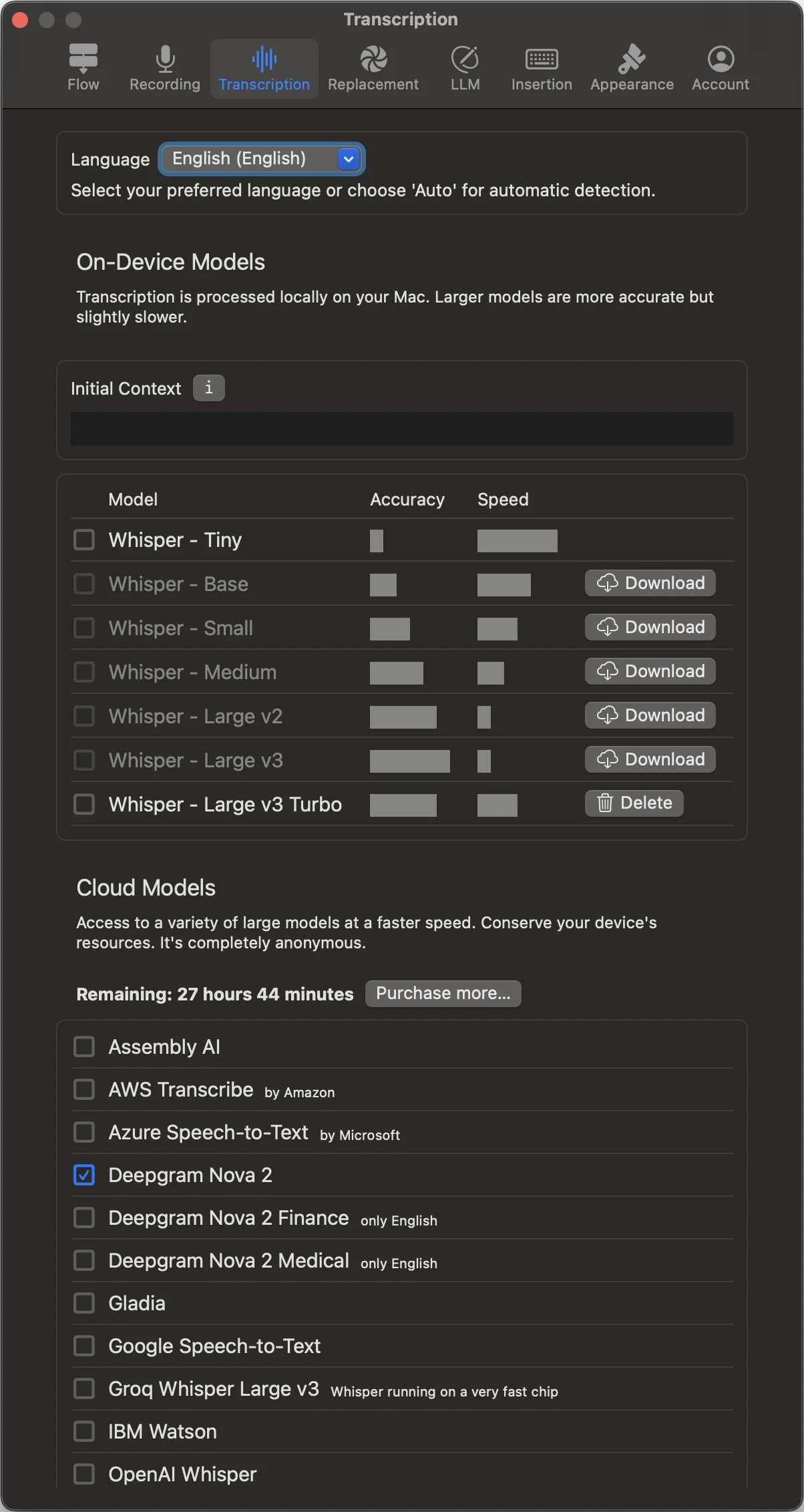
An available on-device model processes your recording on your Mac. Download any required model files before relying on it. Selecting a cloud speech model sends the audio and necessary speech settings to Dictop's speech service and the selected provider.
That choice controls transcription. Refining, saving, or sending the resulting text to another app involves separate settings and services.
Check AI refinement and context
If you want Dictop to refine your transcript, check which AI model you select. Apple Intelligence processes the applicable text on device where supported and selected. Cloud refinement sends the transcript and configured prompts needed for the rewrite.
On Mac, optional app or screen context can add extracted text to those prompts. Start with transcript-only refinement if you do not need contextual rewriting. Allowed Apps restricts current-app capture only; entire-screen capture is not filtered by that list. Extracted context included in a cloud prompt is part of that cloud request.
Dictop requires Screen Recording permission for app or screen text capture. Accessibility permission is a separate macOS requirement for automatic text insertion.
Decide what to keep locally
Keep transcript history if you want to find previous dictations or compare on-demand versions. Review the history controls and remove notes you no longer want to keep on your Mac. In the current Mac app, continuous mode saves accumulated processed text even when Save transcriptions is off. Use on-demand mode when you need that switch to govern saving.
Sending a finished transcript into another app introduces that app's own storage and processing behavior. Local transcription cannot control what a destination service does with text you submit to it.
Choose your diagnostics settings
Dictop's main app uses Firebase for usage, diagnostics and essential configuration. Usage Analytics and Crash Diagnostics have separate settings; essential configuration services are not disabled by those switches. Choosing local speech processing does not turn off all data collection or network activity.
To process your audio and text locally, choose an on-device speech model, disable cloud refinement or use supported Apple Intelligence, and leave optional context off unless you need it. Then review history and the destination app separately.
Read Dictop's full privacy policy for processing, retention and settings details. Explore the Mac app to test the workflow.
By Dictop · Reviewed
Detailed settings and reference
On-device speech models process audio locally. Cloud speech-to-text and cloud AI refinement send the content needed for the selected request. The main app also uses Firebase services, with separate usage analytics and crash diagnostics controls. See the privacy policy for full details.
What stays local
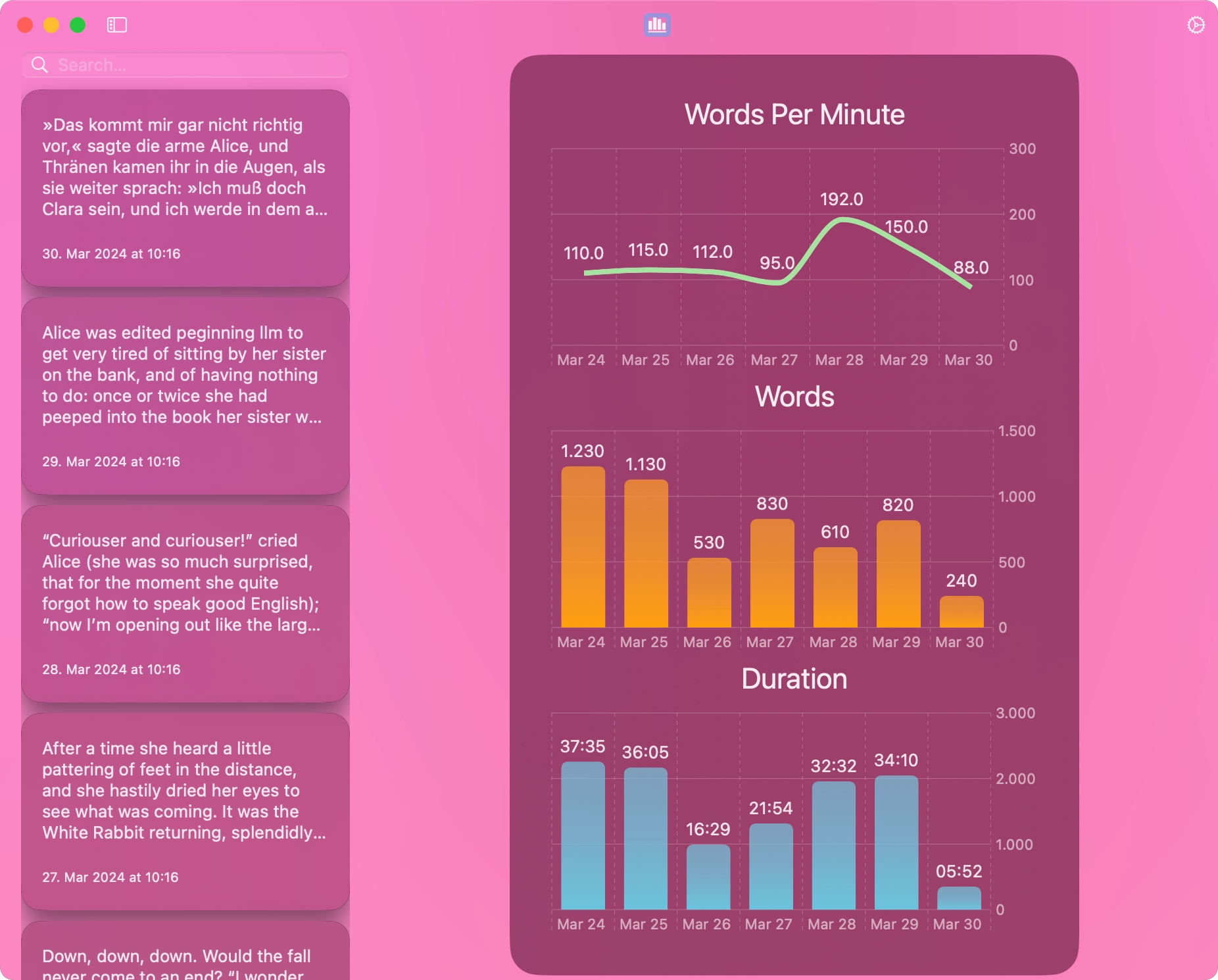
On‑device speech models process audio locally on your Mac. Saved transcripts are stored locally in History, where you can search, delete, copy or share them.
On‑device models
Choose Whisper sizes that balance accuracy and resource use, then download and activate them. Local speech recognition does not upload audio for transcription; processing time depends on your Mac and model.
Local storage, predictable behavior
On-demand notes are saved in History by default, with Original, Replaced and LLM versions when present. You can disable on-demand saving, delete saved notes, and copy or share entries. Continuous mode saves accumulated processed text without separate versions and currently saves even when Save transcriptions is off.
Cloud when you need it—explicit
When selected, cloud transcription sends the audio and speech settings needed for the request; cloud rewriting sends the transcript and configured prompts. On-device processing keeps the applicable content on the device for that processing. Separately, Firebase services provide usage analytics, diagnostics and essential configuration. See the privacy policy for full details and controls.
Accuracy and workflow
Test your selected model on your language and terminology. During on-demand dictation, if the LLM takes too long, cancel its processing and dictop falls back to the Replaced version.
Permissions
- Microphone: required for recording.
- Accessibility (macOS): needed for paste/typing insertion and muting speakers.
- Screen Recording (macOS): needed to capture text for LLM placeholders. Allowed Apps controls current-app capture only; it does not filter entire-screen capture.
Defaults
Settings are configurable and defaults can change by release. The earlier Mac defaults were: On-Demand mode; copy output rather than typing; Insert Latest prefers LLM, then Replaced, then Original; prepend one space; no append; History on; sounds on; pause shortcut uses press/release; Language Auto; silence threshold 3 seconds; Whisper Tiny active by default.
Privacy notes
On‑device speech models keep audio local for transcription. Select supported Apple Intelligence or leave refinement off to keep that text processing local too. When you use LLM placeholders for screen or app text, extraction happens locally and only the text string is included in your prompt. Cloud refinement sends the configured prompt, including any extracted context, for processing.